
1. High Costs of Traditional MPLS and Network Rigidity
As enterprises adopt more SaaS services (like Microsoft 365, Salesforce) and multicloud architectures, traditional WAN layouts have become insufficient. Relying on expensive, bandwidth-limited MPLS lines forced "backhauling" traffic to headquarters for security checks, creating latency and bandwidth bottlenecks. Furthermore, setting up traditional lines for new overseas branches can take months, hindering business agility.
2. Intelligent Routing and Application Awareness in SD-WAN
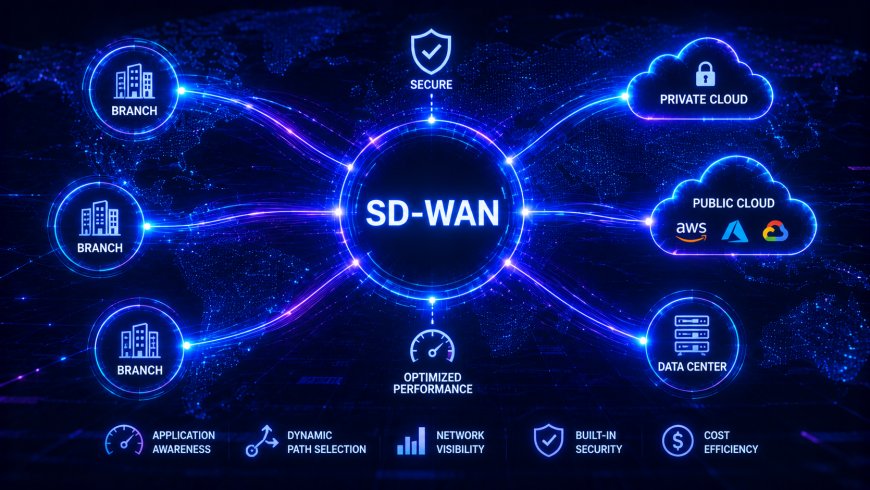
Software-Defined WAN (SD-WAN) revolutionizes enterprise connectivity by decoupling the control plane from the data plane:
- Line Agnostic & Bandwidth Aggregation: SD-WAN devices can integrate MPLS, broadband, and 4G/5G LTE, virtualizing them into a single high-speed channel with seamless redundancy.
- Application-Aware Routing: Unlike traditional routers that only recognize IP addresses, SD-WAN identifies thousands of applications. It monitors latency, jitter, and packet loss in real-time, directing critical traffic (like Zoom/Teams) to the best path while sending low-priority backups over cheaper lines.
3. Integrating Cloud-Native Hubs and SASE Security
Our SD-WAN solutions align with the SASE (Secure Access Service Edge) framework, enabling Direct Internet Access (DIA) for branches with built-in next-gen firewalls, IPS, and content filtering. For multicloud, SD-WAN integrates seamlessly with AWS Transit Gateway or Azure Virtual WAN, treating global cloud endpoints as local nodes.
4. Zero Touch Provisioning (ZTP) for Global Branches
Deploying international networks is no longer a nightmare. With Zero Touch Provisioning, new branches don't need on-site network admins; local staff simply plug in the SD-WAN device, and it automatically downloads policies and configurations from the cloud. Our 24/7 team monitors global network health through a single dashboard, providing a modern, flexible, and manageable enterprise network.