
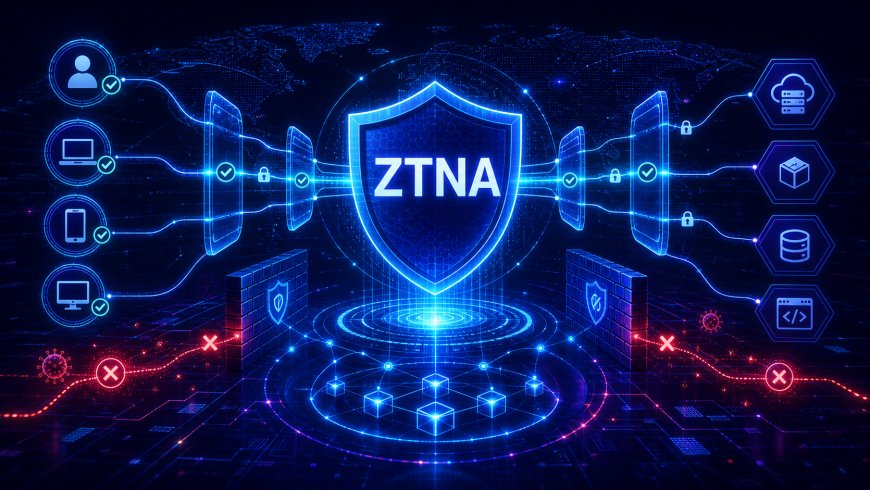
1. Failure of Traditional VPNs and Lateral Movement Attacks
In the past, security was like a castle with a moat, relying on firewalls and VPNs for perimeter defense. However, with cloud apps, remote work, and BYOD, the network boundary has dissolved. Traditional VPNs have a fatal flaw: once a hacker steals credentials or infects a connected laptop, they gain "broad access" to the internal network. They can perform "Lateral Movement," moving freely between servers to compromise databases and plant ransomware.
2. Core Principles of Zero Trust (ZTNA)
Zero Trust Network Access (ZTNA) follows the principle: "Never Trust, Always Verify." In this architecture, IP addresses are no longer credentials of trust. Key mechanisms include:
- Continuous Identity & Device Verification: Access isn't granted "once and for all." The system dynamically assesses real-time behavior (e.g., sudden location changes) and device health (OS updates, antivirus status) to cut high-risk connections instantly.
- Least Privilege & Micro-segmentation: Every request is independently reviewed. An accounting employee, even if verified, can only access financial systems. HR systems and core databases remain "invisible" to them, blocking lateral movement.
- Application Cloaking: Internal services no longer expose listening ports to the public internet. Lightweight connectors establish outbound encrypted tunnels to a cloud gateway, leaving no entrance for hackers to scan.
3. Integrating Multicloud IdP and Endpoint Security
Wang Cloud helps build a strong Zero Trust ecosystem. we integrate ZTNA solutions (like Cloudflare Zero Trust, Zscaler, or Prisma Access) with your existing Identity Providers (IdP) like Azure AD, Okta, or Google Workspace. This enables seamless MFA/SSO and links with Endpoint Detection and Response (EDR). If EDR detects a suspicious script on a laptop, the ZTNA gateway can instantly block that device's access to all cloud resources.
4. Smooth Transition with Wang Cloud Advisory
Moving from a traditional architecture to Zero Trust is a systemic project. Our consultants provide detailed "Asset and Privilege Inventory Analysis." We use a phased deployment strategy, running VPN and ZTNA in parallel initially. This allows you to gradually bring critical apps under Zero Trust protection without disrupting daily operations, ultimately retiring expensive and risky legacy VPN equipment.